understanding relay production: processes, applications, and innovations
Release time:2025-12-04 09:51:32
Relay production plays a vital role in the manufacturing of electrical components that control electrical circuits. A relay is an electrically operated switch that opens or closes contacts to allow or interrupt the flow of electricity. Widely used in industrial automation, telecommunications, transportation, and automotive systems, relays are essential for ensuring the reliable and efficient operation of electrical systems. In this article, we will explore the processes involved in relay production, the different types of relays, and how the industry is innovating to meet the growing demands of modern technology.
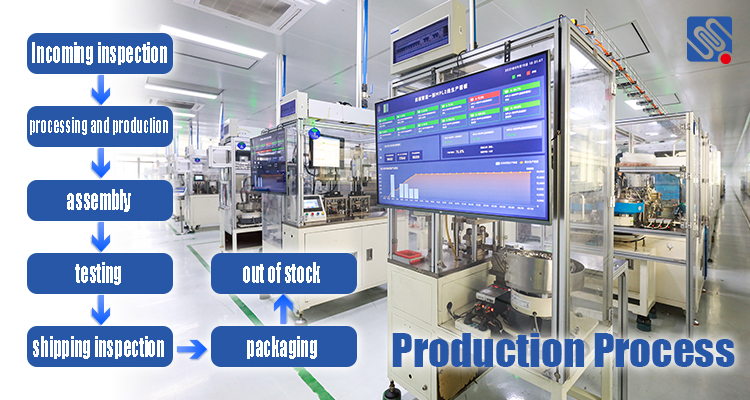
The Relay Production Process The production of a relay involves several critical stages, from initial design to final testing. Each phase requires precision, as even small imperfections can lead to malfunctions in the final product. 1. Design and Development The first stage in relay production is the design phase. Engineers and designers work closely to determine the specifications for the relay, taking into account factors such as voltage, current, switching capacity, and environmental conditions. There are several types of relays, such as electromagnetic relays, solid-state relays, and thermal relays, each designed for specific applications. The design phase involves creating detailed blueprints and prototypes that meet the desired electrical and mechanical performance criteria.




 Chat Oline