understanding the 220v ac relay: applications, working principles, and selection guide
Release time:2025-12-05 11:51:42
Relays are integral components in many electrical and electronic systems, allowing control over circuits that are typically too dangerous or complex to manage directly. Among various types of relays, the 220V AC relay is one of the most widely used, especially for controlling high-voltage AC systems in residential, industrial, and commercial applications. In this article, we’ll delve into the working principles, common applications, and key factors to consider when selecting a 220V AC relay.
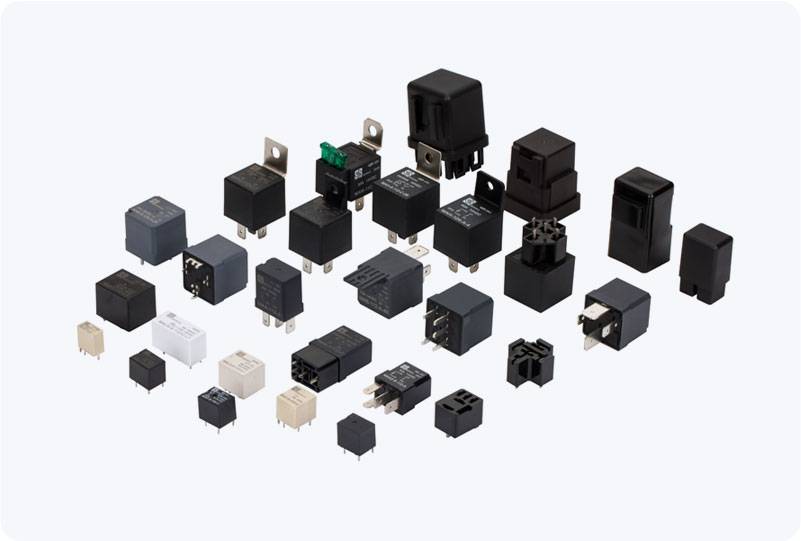
Working Principle of a 220V AC Relay A relay is an electrically operated switch that uses an electromagnet to control the opening and closing of electrical contacts. The core principle behind a 220V AC relay is relatively simple: when a small control current flows through the coil of the relay, it generates a magnetic field that attracts a metal armature, which in turn causes the relay contacts to either open or close. This operation allows a low-voltage circuit (typically 5V DC or 12V DC) to control a high-voltage AC circuit, such as one operating at 220V. The 220V AC relay usually has two main parts: the coil and the contacts. The coil is powered by a low-voltage supply, while the contacts are connected to the high-voltage AC circuit. The relay functions by switching the contacts in response to the magnetic field created by the energized coil, enabling or interrupting the flow of electricity in the high-voltage circuit.




 Chat Oline