understanding relay production: enhancing efficiency in modern manufacturing
Release time:2026-01-06 14:57:53
Relay production, also known as intermediate production, is a multifaceted strategy that has gained substantial traction in modern manufacturing, logistics, and information technology ecosystems. By emphasizing a segmented approach to production and supply chain processes, relay production aims to optimize efficiency, reduce costs, and enhance flexibility in responding to market demands. In this article, we delve into the fundamentals of relay production, its applications, advantages, challenges, and technological support, providing a comprehensive overview of this innovative approach.
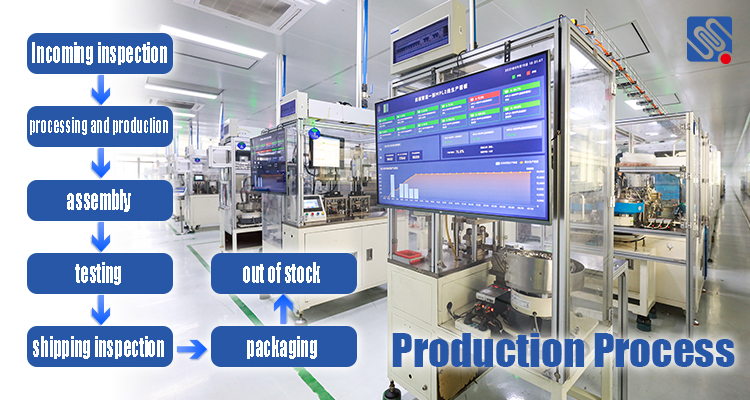
At its core, relay production transforms traditional linear manufacturing processes into a more dynamic, modular system. Instead of relying on a singular, uninterrupted workflow, relay production breaks down tasks into distinct stages, allowing different teams or machines to operate simultaneously on various components of a product. This ability to parallelize tasks significantly reduces the time required to bring products to market.
A prime application of relay production can be found in the manufacturing sector, where businesses implement multiple workstations or production lines. Each station is responsible for a specific phase of the production cycle—be it assembly, quality control, or packaging. As products move between these stations, workers can focus on specialized tasks, leading to higher productivity levels and superior craftsmanship. This modularity allows for greater flexibility in production schedules, enabling companies to swiftly adjust outputs in response to changing consumer preferences.




 Chat Oline