understanding general-purpose relay: a key component in electrical control systems
Release time:2025-12-08 11:45:01
A General-purpose relay is an essential electrical component used in various automation, control, and switching systems. It serves as a bridge between low-voltage control circuits and high-power applications. With its ability to control large electrical currents using small control signals, the general-purpose relay is a widely used device in industrial machinery, home appliances, automotive systems, and more. This article explores the function, structure, types, applications, advantages, and limitations of general-purpose relays.
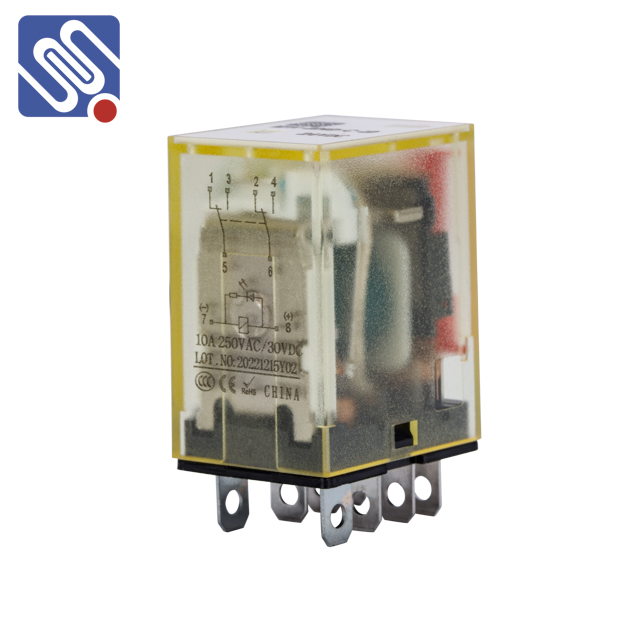
What is a General-purpose Relay? At its core, a General-purpose relay is an electromechanical switch. It consists of a coil that, when energized, creates a magnetic field. This magnetic field attracts or repels a movable armature, which in turn opens or closes electrical contacts. The contacts can either be normally open (NO) or normally closed (NC), depending on the relay's design. When the relay coil is energized, the contacts change their state, enabling or interrupting the flow of current in the connected circuit. Working Principle The operating principle of a general-purpose relay relies on electromagnetism. When an electric current flows through the relay coil, it generates a magnetic field that pulls a movable armature. This movement either connects or disconnects the electrical contacts, which control the power circuit. The contacts are made of metal, and their state changes from open to closed or vice versa. Once the coil is de-energized, a spring typically returns the armature to its original position, reversing the contact state.




 Chat Oline