understanding relay circuits: principles, applications, and benefits
Release time:2025-12-09 05:08:19
Relay circuits are fundamental components in modern electrical systems, serving as the bridge between low-voltage control circuits and high-voltage power circuits. A relay is an electrically operated switch that enables a small current to control a larger current, allowing engineers and technicians to manage complex systems more safely and efficiently. This article delves into the working principles of relay circuits, their key components, common applications, and the advantages they offer in various industries.
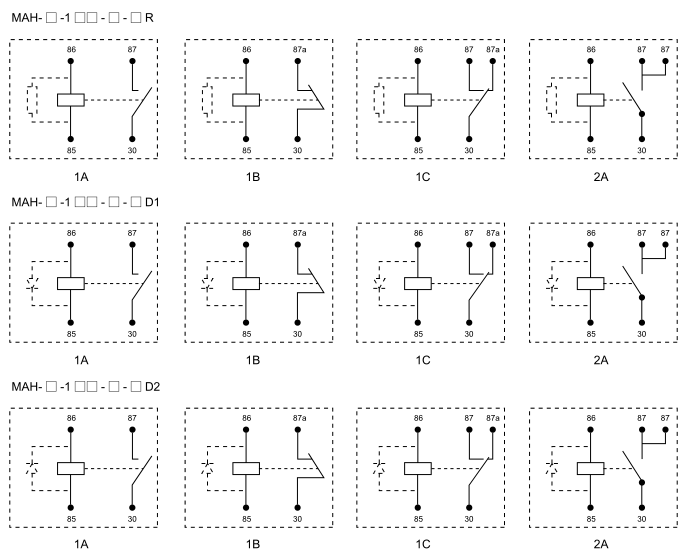
What is a Relay Circuit? A relay circuit uses a relay—an electromechanical switch that opens or closes a circuit based on an electrical signal. The relay operates on the principle of electromagnetic induction, where an electrical current is passed through a coil to generate a magnetic field. This magnetic field pulls an armature that either opens or closes contacts, completing or breaking a circuit. Relays can control a wide range of devices, from lights and motors to complex automated systems. There are two main types of relay contacts: normally open (NO) and normally closed (NC). In a normally open relay, the contacts remain open when the relay is not energized, allowing the circuit to remain off. Once the relay is activated, the contacts close, completing the circuit. Conversely, a normally closed relay keeps the contacts closed when de-energized, and when the relay is activated, the contacts open to break the circuit.




 Chat Oline