


Water treatment systems play a crucial role in ensuring access to clean and safe water for residential, commercial, and industrial applications. Among the key components that enable efficient water treatment operations is the solenoid valve—a small yet powerful device that controls the flow of water within these systems. In this article, we will explore the function, types, and significance of solenoid valves in water treatment systems, as well as their impact on overall system performance.
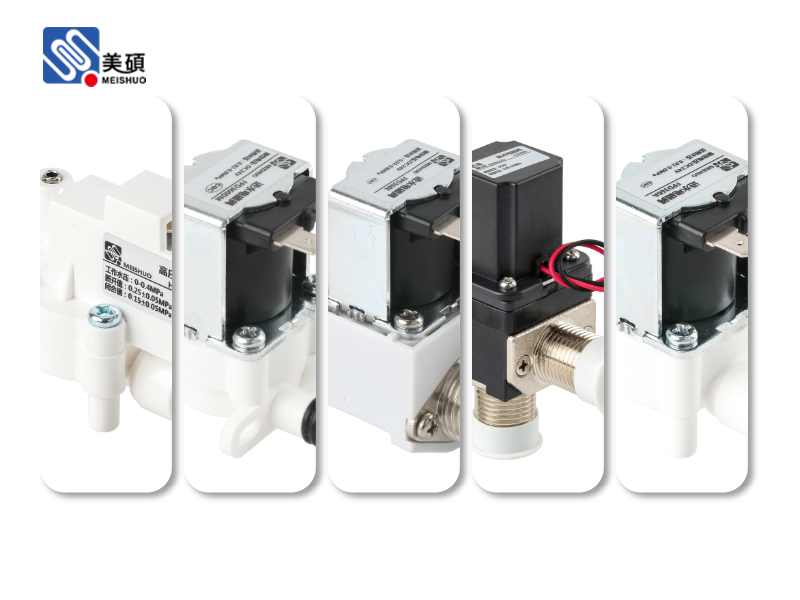
Solenoid valves operate on the principle of electromagnetism, using an electric current to actuate a valve mechanism. When an electric signal is applied, a magnetic field is generated, causing a plunger or diaphragm to move and either open or close the valve. This allows for precise control over water flow, making solenoid valves ideal for applications where on-demand flow regulation is required. In water treatment systems, solenoid valves are commonly used in processes such as filtration, disinfection, and chemical dosing.
One of the primary functions of solenoid valves in water treatment is to control the flow of water through different stages of the purification process. For example, in a reverse osmosis (RO) system, solenoid valves are used to start and stop the flow of water through the RO membrane, ensuring that the system operates efficiently and only produces water when needed. Similarly, in a chemical dosing system, solenoid valves regulate the flow of chemicals such as chlorine or coagulants, ensuring accurate and consistent dosing to maintain water quality.
There are several types of solenoid valves used in water treatment systems, each designed for specific applications. Direct-acting solenoid valves are simple and reliable, suitable for low-pressure applications. Pilot-operated solenoid valves, on the other hand, use a small pilot valve to control the main valve, making them ideal for high-pressure systems. Additionally, there are normally closed (NC) and normally open (NO) solenoid valves, which determine the valve's default state when no electric signal is applied.
The reliability and durability of solenoid valves are critical in water treatment systems, as any failure can lead to system downtime and compromised water quality. To ensure optimal performance, solenoid valves are often constructed from corrosion-resistant materials such as stainless steel or brass, which can withstand the harsh conditions of water treatment processes. Regular maintenance, including cleaning and lubrication, is also essential to extend the lifespan of solenoid valves and prevent malfunctions.
In addition to their functional role, solenoid valves contribute to the overall efficiency of water treatment systems. By enabling precise flow control, they help reduce water waste and energy consumption. For example, in a residential water softener system, a solenoid valve can automatically regenerate the resin bed when necessary, ensuring that the system operates at peak efficiency without unnecessary water usage.
The integration of solenoid valves with advanced control systems has further enhanced their capabilities in water treatment. Modern water treatment systems often use programmable logic controllers (PLCs) or microprocessors to monitor and adjust solenoid valve operations in real-time. This allows for more precise control over water flow and chemical dosing, leading to improved water quality and system performance.
In conclusion, solenoid valves are essential components of water treatment systems, enabling precise control over water flow and chemical dosing. Their reliability, durability, and efficiency make them indispensable in ensuring the production of clean and safe water. As water treatment technology continues to advance, solenoid valves will remain a key element in the development of more efficient and sustainable water purification processes.

 Chat Oline