


In the world of fluid control systems, the direct acting solenoid valve stands as a cornerstone technology, quietly powering countless industrial and commercial applications. This compact yet powerful device has revolutionized how we manage fluid flow, offering precise control, rapid response, and exceptional reliability across diverse industries.
At its core, a direct acting solenoid valve operates on a simple yet ingenious principle: electromagnetic force directly actuates the valve mechanism. Unlike pilot-operated valves that rely on fluid pressure to assist in valve operation, direct acting valves use the full force of the solenoid to open or close the valve. This design gives them distinct advantages in applications requiring immediate response and reliable operation even at low pressures.
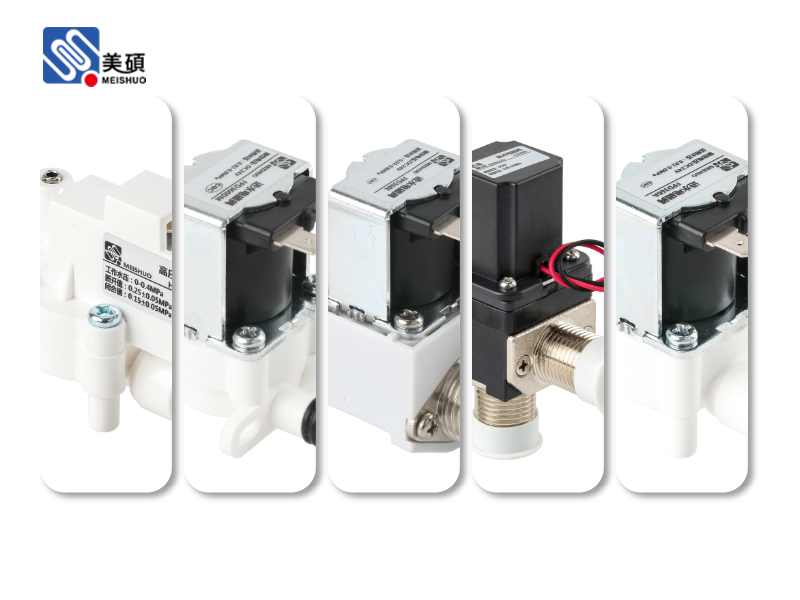
The basic structure of a direct acting solenoid valve consists of three main components: the solenoid coil, the armature, and the valve body with a sealing element. When an electrical current is applied to the coil, it generates a magnetic field that pulls the armature towards the coil. This movement directly lifts the sealing element from the valve seat, allowing fluid to flow through the valve. When the current is removed, a spring returns the armature and sealing element to their original position, closing the valve and stopping fluid flow.
One of the most significant advantages of direct acting solenoid valves is their ability to operate at zero pressure differential. This makes them ideal for applications where fluid pressure is minimal or non-existent, such as vacuum systems or low-pressure gas control. Their direct actuation mechanism also provides extremely fast response times, typically in milliseconds, which is critical for applications requiring precise timing and rapid on/off cycles.
The versatility of direct acting solenoid valves is evident in their wide range of applications. In the automotive industry, they control fuel injection systems, transmission fluid flow, and emission control mechanisms. In medical equipment, they regulate the flow of gases and liquids in diagnostic devices and treatment systems. Industrial automation systems rely on them for pneumatic and hydraulic control, while HVAC systems use them to manage refrigerant flow and air distribution.
Despite their many advantages, direct acting solenoid valves do have limitations. Their direct actuation design means they generally handle lower flow rates compared to pilot-operated valves of similar size. They also require more power to operate, as the solenoid must generate enough force to overcome both the spring tension and any fluid pressure acting on the valve. However, these limitations are often outweighed by their reliability, simplicity, and ability to operate in challenging conditions.
The evolution of direct acting solenoid valve technology continues to address these limitations. Modern designs incorporate advanced materials such as PTFE and FKM for seals, improving chemical resistance and extending service life. Miniaturization efforts have produced micro-solenoid valves that fit in the palm of a hand while maintaining impressive performance characteristics. Smart solenoid valves with integrated sensors and communication capabilities are also emerging, enabling real-time monitoring and predictive maintenance.
Proper selection and maintenance are crucial for maximizing the performance and lifespan of direct acting solenoid valves. Key factors to consider include fluid type, pressure range, temperature limits, and required flow rate. Regular maintenance, including cleaning, lubrication, and seal replacement, can prevent common issues such as sticking valves or reduced performance.
In conclusion, the direct acting solenoid valve represents a perfect marriage of simplicity and performance in fluid control technology. Its direct actuation mechanism provides unparalleled reliability and responsiveness, making it an essential component in modern industrial and commercial systems. As technology advances, we can expect even more innovative applications and improvements to this versatile device, solidifying its position as an unsung hero in the world of fluid control.

 Chat Oline