


An electromechanical relay uses an energized coil to move one or more mechanical contacts. It allows a low-power control signal to switch a separate circuit and remains common in appliance, automotive, industrial and power-control designs.
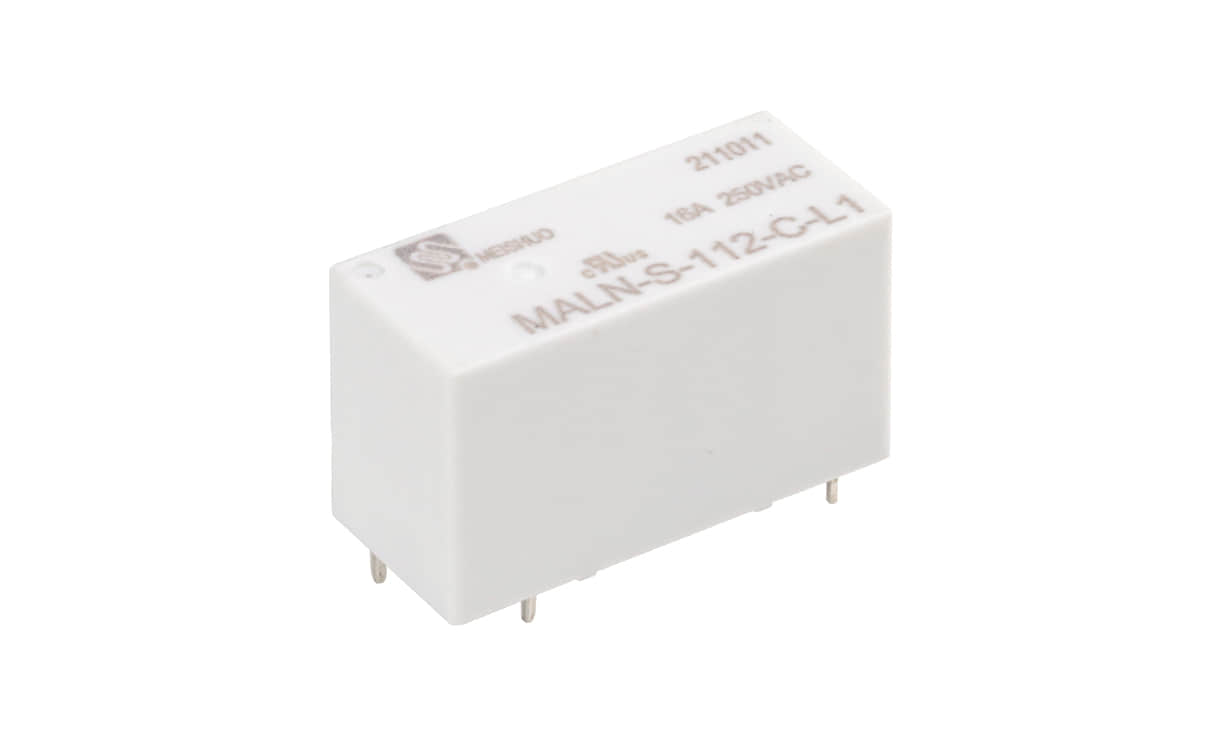
A 5 V, 12 V or 24 V coil is not interchangeable. The driver must provide the specified current, and DC coils may require a flyback protection method appropriate to the switching speed and circuit.
Normally open (NO), normally closed (NC) and changeover contacts offer different control logic. Verify how the relay behaves when the coil is de-energized, and distinguish pin arrangement from contact configuration.
Resistive, inductive, capacitive and motor loads stress contacts differently. A nominal current figure without the voltage, load type, duty and switching life is not enough for selection.
Meishuo lists general-purpose, automotive, communication, industrial, power, new-energy and smart-home relay families. Choose by the circuit requirements and request the model-specific contact data.
Check creepage and clearance, coil insulation, temperature rise, contact bounce, mounting footprint and the available qualification records. Prototype and life testing are recommended before series production.
| Selection point | Required confirmation |
|---|---|
| Coil | Voltage and input drive current |
| Contacts | NO/NC/changeover, materials and pinout |
| Load | Resistive/inductive, surge and switching life |
| Qualification | Thermal, insulation and actual model tests |
A magnetic coil physically operates contacts.
No. SSRs switch electronically and have different heat and leakage behavior.
No. The contact rating and load type must also be compatible.
Explore related products: MSRELAY — Explore related products

 Chat Oline
